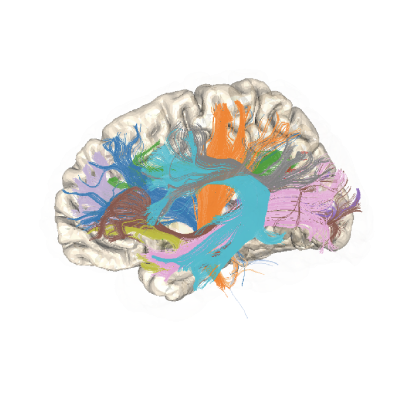
import logging
import math
import os
import os.path as op
import tempfile
from math import radians
from time import time
import nibabel as nib
from dipy.align import resample
from PIL import Image, ImageDraw, ImageFont
from tqdm.auto import tqdm
import AFQ.utils.streamlines as aus
from AFQ.api.utils import (
AFQclass_doc,
check_attribute,
export_all_helper,
kwargs_descriptors,
used_kwargs_exceptions,
val_from_plan,
valid_exports_string,
)
from AFQ.definitions.mapping import SlrMap
from AFQ.tasks.data import get_data_plan
from AFQ.tasks.mapping import get_mapping_plan
from AFQ.tasks.segmentation import get_segmentation_plan
from AFQ.tasks.structural import get_structural_plan
from AFQ.tasks.tissue import get_tissue_plan
from AFQ.tasks.tractography import get_tractography_plan
from AFQ.tasks.utils import get_base_fname
from AFQ.tasks.viz import get_viz_plan
from AFQ.utils.bin import pyafq_str_to_val
from AFQ.utils.path import apply_cmd_to_afq_derivs, drop_extension
from AFQ.viz.utils import BEST_BUNDLE_ORIENTATIONS, get_eye, trim
__all__ = ["ParticipantAFQ"]
logger = logging.getLogger("AFQ")
[docs]
class ParticipantAFQ(object):
f"""{AFQclass_doc}"""
def __init__(
self,
dwi_data_file,
bval_file,
bvec_file,
t1_file,
output_dir,
logging_level=logging.INFO,
**kwargs,
):
"""
Initialize a ParticipantAFQ object.
Parameters
----------
dwi_data_file : str
Path to DWI data file.
bval_file : str
Path to bval file.
bvec_file : str
Path to bvec file.
t1_file : str
Path to T1-weighted image file. Must already be registered
to the DWI data, though not resampled.
output_dir : str
Path to output directory.
logging_level: int, optional
The logging level to use for this class.
Default: logging.INFO
kwargs : additional optional parameters
You can set additional parameters for any step
of the process. See :ref:`usage/kwargs` for more details.
Examples
--------
api.ParticipantAFQ(
dwi_data_file, bval_file, bvec_file, t1_file, output_dir,
csd_sh_order_max=4)
api.ParticipantAFQ(
dwi_data_file, bval_file, bvec_file, t1_file, output_dir,
reg_template_spec="mni_t2", reg_subject_spec="b0")
Notes
-----
In tracking_params, parameters with the suffix mask which are also
an image from AFQ.definitions.image will be handled automatically by
the api.
"""
if not isinstance(output_dir, str):
raise TypeError("output_dir must be a str")
if not isinstance(dwi_data_file, str):
raise TypeError("dwi_data_file must be a str")
if not isinstance(bval_file, str):
raise TypeError("bval_file must be a str")
if not isinstance(bvec_file, str):
raise TypeError("bvec_file must be a str")
if not op.exists(output_dir):
raise ValueError(f"output_dir does not exist: {output_dir}")
if "tractography_params" in kwargs:
raise ValueError(
(
"unrecognized parameter tractography_params, "
"did you mean tracking_params ?"
)
)
[docs]
self.logger = logging.getLogger("AFQ")
self.logger.setLevel(logging_level)
logging.basicConfig(level=logging_level)
# This is remembered to warn users
# if their inputs are unused
[docs]
self.og_kwargs = kwargs.copy()
[docs]
self.kwargs = dict(
dwi_data_file=dwi_data_file,
bval_file=bval_file,
bvec_file=bvec_file,
t1_file=t1_file,
output_dir=output_dir,
base_fname=get_base_fname(output_dir, dwi_data_file),
citations={"kruper2025software", "Kruper2021-xb", "garyfallidis2014dipy"},
**kwargs,
)
self.make_workflow()
[docs]
def make_workflow(self):
# construct immlib plans
if "mapping_definition" in self.kwargs and isinstance(
self.kwargs["mapping_definition"], SlrMap
):
plans = { # if using SLR map, do tractography first
"structural": get_structural_plan(self.kwargs),
"data": get_data_plan(self.kwargs),
"tissue": get_tissue_plan(self.kwargs),
"tractography": get_tractography_plan(self.kwargs),
"mapping": get_mapping_plan(self.kwargs, use_sls=True),
"segmentation": get_segmentation_plan(self.kwargs),
"viz": get_viz_plan(self.kwargs),
}
else:
plans = { # Otherwise, do mapping first
"structural": get_structural_plan(self.kwargs),
"data": get_data_plan(self.kwargs),
"tissue": get_tissue_plan(self.kwargs),
"mapping": get_mapping_plan(self.kwargs),
"tractography": get_tractography_plan(self.kwargs),
"segmentation": get_segmentation_plan(self.kwargs),
"viz": get_viz_plan(self.kwargs),
}
# Fill in defaults not already set
for _, kwargs_in_section in kwargs_descriptors.items():
for key, value in kwargs_in_section.items():
if key not in self.kwargs:
self.kwargs[key] = value.get("default", None)
self.kwargs[key] = pyafq_str_to_val(self.kwargs[key])
# chain together a complete plan from individual plans
used_kwargs = dict.fromkeys(self.og_kwargs, 0)
previous_plans = {}
for name, plan in plans.items():
plan_kwargs = {}
for key in plan.inputs:
# Mark kwarg was used
if key in used_kwargs:
used_kwargs[key] = 1
# Construct kwargs for plan
if key in self.kwargs:
plan_kwargs[key] = self.kwargs[key]
elif key in previous_plans:
plan_kwargs[key] = previous_plans[key]
else:
raise NotImplementedError(
f"Missing required parameter {key} for {name} plan"
)
previous_plans[f"{name}_imap"] = plan(**plan_kwargs)
for key, val in used_kwargs.items():
if val == 0 and key not in used_kwargs_exceptions:
self.logger.warning(
f"Parameter {key} was not used in any plan. "
"This may be a mistake, please check your parameters."
)
self.plans_dict = previous_plans
[docs]
def export(self, attr_name="help"):
"""
Export a specific output. To print a list of available outputs,
call export without arguments.
Parameters
----------
attr_name : str
Name of the output to export. Default: "help"
Returns
-------
output : any
The specific output, or None if called without arguments.
"""
section = check_attribute(attr_name)
if section == "help":
return None
if section is not None:
plan = self.plans_dict[section]
else:
plan = self.plans_dict
return val_from_plan(plan, attr_name)
[docs]
def export_up_to(self, attr_name="help"):
f"""
Export all derivatives up to, but not including, the specified output.
To print a list of available outputs,
call export_up_to without arguments.
{valid_exports_string}
Parameters
----------
attr_name : str
Name of the output to export up to. Default: "help"
"""
section = check_attribute(attr_name)
if section == "help" or section is None:
return None
calcdata = self.plans_dict[section].plan.calcdata
idx = calcdata.sources[attr_name]
if isinstance(idx, tuple):
idx = idx[0]
for inputs in calcdata.calcs[idx].inputs:
self.export(inputs)
[docs]
def export_all(
self, viz=True, xforms=True, indiv=True, delete_full_tractogram=False
):
f""" Exports all the possible outputs
{valid_exports_string}
Parameters
----------
viz : bool
Whether to output visualizations. This includes tract profile
plots, a figure containing all bundles, and, if using the AFQ
segmentation algorithm, individual bundle figures.
Default: True
xforms : bool
Whether to output the reg_template image in subject space and,
depending on if it is possible based on the mapping used, to
output the b0 in template space.
Default: True
indiv : bool
Whether to output individual bundles in their own files, in
addition to the one file containing all bundles. If using
the AFQ segmentation algorithm, individual ROIs are also
output.
Default: True
delete_full_tractogram : bool
Whether to delete the full, unsegmented tractogram (and its
associated json) after all other outputs have been generated.
This can be useful for saving disk space, as the full
tractogram is typically over 90 percent of the total output size.
Only the full tractogram and its json are deleted;
all other outputs are left in place.
Default: False
"""
start_time = time()
export_all_helper(self, xforms, indiv, viz)
if delete_full_tractogram:
self.delete_full_tractogram()
self.logger.info(f"Time taken for export all: {time() - start_time}")
[docs]
def delete_full_tractogram(self):
"""
Delete the full, unsegmented tractogram (and its associated json).
Only the full tractogram and its json are deleted; all other
outputs are left in place.
"""
tractogram_file = self.export("streamlines")
for fname in (tractogram_file, drop_extension(tractogram_file) + ".json"):
if op.exists(fname):
os.remove(fname)
self.logger.info(f"Deleted {fname}")
[docs]
def participant_montage(self, images_per_row=3, anatomy=True, bundle_names=None):
"""
Generate montage of all bundles for a given subject.
Parameters
----------
images_per_row : int
Number of bundle images per row in output file.
Default: 3
anatomy : bool
Whether to include anatomical images in the montage.
Default: True
bundle_names : list of str or None
List of bundle names to include in the montage.
Default: None (includes all bundles)
Returns
-------
filename of montage images
"""
tdir = tempfile.gettempdir()
all_fnames = []
seg_sft = aus.SegmentedSFT.fromfile(self.export("bundles"))
if bundle_names is None:
bundle_names = list(seg_sft.bundle_names)
self.logger.info("Generating Montage...")
viz_backend = self.export("viz_backend")
t1 = nib.load(self.export("t1_masked"))
best_scalar = nib.load(self.export(self.kwargs["best_scalar"]))
best_scalar = resample(best_scalar, t1)
size = (images_per_row, math.ceil(3 * len(bundle_names) / images_per_row))
for ii, bundle_name in enumerate(tqdm(bundle_names)):
flip_axes = [False, False, False]
for i in range(3):
flip_axes[i] = self.export("dwi_affine")[i, i] < 0
if anatomy:
figure = viz_backend.visualize_volume(
t1.get_fdata(), flip_axes=flip_axes, interact=False, inline=False
)
else:
figure = None
figure = viz_backend.visualize_bundles(
seg_sft,
img=t1,
shade_by_volume=best_scalar.get_fdata(),
color_by_direction=True,
flip_axes=flip_axes,
bundle=bundle_name,
figure=figure,
n_points=40,
interact=False,
inline=False,
)
for jj, view in enumerate(["Sagittal", "Coronal", "Axial"]):
direc = BEST_BUNDLE_ORIENTATIONS.get(
bundle_name, ("Left", "Front", "Top")
)[jj]
eye = get_eye(view, direc)
this_fname = tdir + f"/t{ii}_{view}.png"
if "plotly" in viz_backend.backend:
figure.update_layout(
scene_camera=dict(
projection=dict(type="orthographic"),
up={"x": 0, "y": 0, "z": 1},
eye=eye,
center=dict(x=0, y=0, z=0),
),
showlegend=False,
)
figure.write_image(this_fname, scale=4)
else:
from fury import window
show_m = window.ShowManager(
scene=figure, window_type="offscreen", size=(600, 600)
)
window.update_camera(show_m.screens[0].camera, None, figure)
if view == "Coronal":
show_m.screens[0].controller.rotate((0, radians(-90)), None)
elif view == "Axial":
show_m.screens[0].controller.rotate((radians(90), 0), None)
elif view == "Sagittal":
pass
show_m.render()
show_m.window.draw()
show_m.snapshot(fname=this_fname)
def _save_file(curr_img):
save_path = op.abspath(
op.join(self.kwargs["output_dir"], "bundle_montage.png")
)
curr_img.save(save_path)
all_fnames.append(save_path)
this_img_trimmed = {}
max_height = 0
max_width = 0
ii = 0
for b_idx, bundle_name in enumerate(bundle_names):
for view in ["Axial", "Coronal", "Sagittal"]:
this_img = Image.open(tdir + f"/t{b_idx}_{view}.png")
try:
this_img_trimmed[ii] = trim(this_img)
except IndexError: # this_img is a picture of nothing
this_img_trimmed[ii] = this_img
text_sz = 40
width, height = this_img_trimmed[ii].size
height = height + text_sz
result = Image.new(
this_img_trimmed[ii].mode, (width, height), color=(255, 255, 255)
)
result.paste(this_img_trimmed[ii], (0, text_sz))
this_img_trimmed[ii] = result
draw = ImageDraw.Draw(this_img_trimmed[ii])
draw.text(
(0, 0),
f"{bundle_name} - {view}",
(0, 0, 0),
font=ImageFont.load_default(text_sz),
)
if this_img_trimmed[ii].size[0] > max_width:
max_width = this_img_trimmed[ii].size[0]
if this_img_trimmed[ii].size[1] > max_height:
max_height = this_img_trimmed[ii].size[1]
ii += 1
curr_img = Image.new(
"RGB", (max_width * size[0], max_height * size[1]), color="white"
)
for jj in range(ii):
x_pos = jj % size[0]
_ii = jj // size[0]
y_pos = _ii % size[1]
this_img = this_img_trimmed[jj].resize((max_width, max_height))
curr_img.paste(this_img, (x_pos * max_width, y_pos * max_height))
_save_file(curr_img)
return all_fnames
[docs]
def cmd_outputs(
self, cmd="rm", dependent_on=None, up_to=None, exceptions=None, suffix=""
):
"""
Perform some command some or all outputs of pyafq.
This is useful if you change a parameter and need
to recalculate derivatives that depend on it.
Some examples: cp, mv, rm .
-r will be automatically added when necessary.
Parameters
----------
cmd : str
Command to run on outputs. Default: 'rm'
dependent_on : str or None
Which derivatives to perform command on .
If None, perform on all.
If "track", perform on all derivatives that depend on the
tractography.
If "recog", perform on all derivatives that depend on the
bundle recognition.
If "prof", perform on all derivatives that depend on the
bundle profiling.
Default: None
up_to : str or None
If None, will perform on all derivatives.
If "track", will perform on all derivatives up to
(but not including) tractography.
If "recog", will perform on all derivatives up to
(but not including) bundle recognition.
If "prof", will perform on all derivatives up to
(but not including) bundle profiling.
Default: None
exceptions : list of str
Name outputs that the command should not be applied to.
Default: []
suffix : str
Parts of command that are used after the filename.
Default: ""
"""
if exceptions is None:
exceptions = []
exception_file_names = []
for exception in exceptions:
file_name = self.export(exception)
if isinstance(file_name, str):
exception_file_names.append(file_name)
else:
self.logger.warning(
(
f"The exception '{exception}' does not correspond"
" to a filename and will be ignored."
)
)
apply_cmd_to_afq_derivs(
self.kwargs["output_dir"],
self.export("base_fname"),
cmd=cmd,
exception_file_names=exception_file_names,
suffix=suffix,
dependent_on=dependent_on,
up_to=up_to,
)
# do not assume previous calculations are still valid
# after file operations
self.make_workflow()
[docs]
clobber = cmd_outputs # alias for default of cmd_outputs